
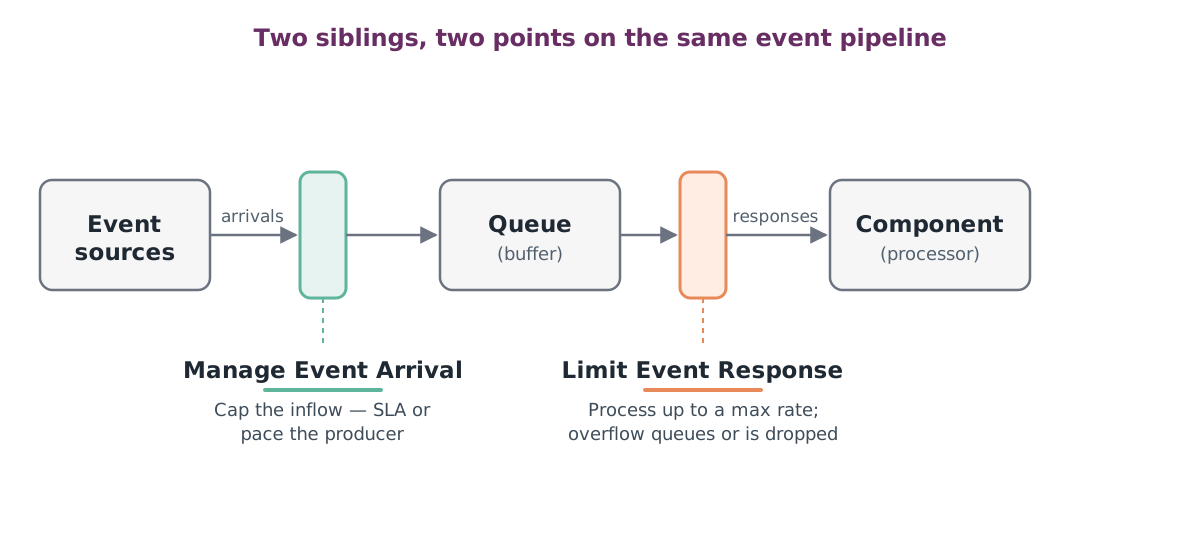
Manage Event Arrival is a control-resource-demand tactic. Rather than scaling to meet whatever load arrives, the system limits how much load is allowed to arrive. Each source agrees to a maximum rate, and the boundary holds the inflow to it.
The classic realization is a service-level agreement (SLA) with an upstream producer that caps the events per second it may send. The tactic shapes the input contract, not how an admitted event is processed.
How It Works
- Characterize each source’s arrival pattern — average rate, burst size, and peak.
- Agree a ceiling per source, as an SLA or a producer-side pacing limit.
- At the boundary, admit events up to the ceiling and pace, batch, or reject the excess.
- Where the source cooperates, push the limit upstream so surplus events are never generated — saving the most work.
Failure Modes
- A ceiling below real demand sheds valid traffic; rejected producers retry, amplifying load.
- A ceiling above sustainable capacity defeats the tactic — the system still overloads when sources burst together.
- Per-source caps alone let aggregate arrival across many in-limit sources exceed capacity.
Verification
- Load-test at the agreed ceiling; confirm p99 latency holds within target while inflow sits at the cap.
- Drive arrival past the ceiling and assert the excess is paced or rejected, never silently dropped.
- Monitor accepted-versus-offered rate in production; a persistent gap signals a mis-sized cap.
Variants and Related Tactics
- Limit Event Response caps the processing rate once events have arrived — the response side of the same problem.
- Rate Limiting (Throttling) caps at an intermediary for anonymous or uncontractable sources.
- Bound Queue Sizes caps the buffer behind the boundary rather than the arrival rate itself.
References
- Software Architecture in Practice — Bass, Clements & Kazman (full citation)